



Board game nights are the best. The only part that tends to fall apart is the scoring.
You finish a great game, someone snaps a photo of the score sheet, everyone says "we'll remember this," and then it disappears into the camera roll forever. Or you try a spreadsheet for a week, it becomes a chore, and suddenly nobody logs anything.
If you want to track board game scores, keep a clean game history, and actually see stats over time, here are the most common ways people do it, what breaks, and what works best for families and friend groups.
5 ways people track board game scores (and where each fails)
1) Paper score sheets
A classic for a reason: it is fast and works offline.
Where it breaks:
- •Sheets get lost
- •No searchable history
- •No stats over time
- •"Who won last time?" becomes a guessing game
If you only want a one off score and never care again, paper is fine. If you want trends, rivals, or a leaderboard, you will outgrow it fast.
2) Notes app or photos
This is the "we'll do something with it later" method.
Where it breaks:
- •Impossible to search reliably
- •Photos do not turn into stats
- •You still have to do the math and summaries yourself
- •History exists, but you cannot use it
3) Spreadsheets
The spreadsheet era is almost a rite of passage for board gamers.
Where it breaks:
- •Someone becomes the "spreadsheet person"
- •Data entry takes longer than it should
- •Copying formulas for different games gets messy
- •It starts feeling like admin work, not game night
Spreadsheets can work, but they are fragile for real life groups.
4) Generic score counter apps
These are great for a quick tally in simple games.
Where it breaks:
- •Often no game history
- •No group tracking
- •Limited support for round based scoring
- •Hard to compare sessions over time
5) A dedicated board game score tracker and stats tracker
This is the option that turns "scores" into something useful: sessions, history, and stats.
A good board game score tracker should let you:
- •Log sessions quickly
- •Keep game history automatically
- •Track stats over time
- •Make scoring easier instead of slower
If you have semi regular game nights, this is usually the best long term fit.
What to look for in a board game scoring app
If you are comparing apps, here are the features that matter most for real game nights.
Group based tracking (family and friends)
Scores make more sense when they live inside a group. Your family game night and your friend group probably have different games, different players, and different vibes.
Look for an app that lets you create groups and keep separate records.
Round based scoring
Some games score by rounds. Others score at the end. Some do both. A lot of scoring friction comes from trying to force everything into one simple "add points" flow.
Round based scoring keeps things clean, especially when you want to review how the game went later.
Automatic calculators for math heavy games
If a game involves a lot of score math, multipliers, end game bonuses, or frequent recalculations, you want help built in.
This is the difference between "scoring killed the momentum" and "we are already setting up the next game."
Game history that is actually usable
It is not enough to save scores. You want a clean session history you can browse later:
- •What you played
- •Who played
- •Who won
- •How often you play a game
- •How your group is trending over time
That is what turns a score log into a real board game stats tracker.
Weekly and monthly leaderboards
Leaderboards are optional, but if your group is competitive, they are pure fun.
Weekly and monthly leaderboards are especially great because they create friendly rivalries without someone being "the champion forever."
A simple setup that takes 2 minutes
Here is a fast workflow that works whether you play with kids, relatives, or a competitive friend group.
Step 1: Create a group
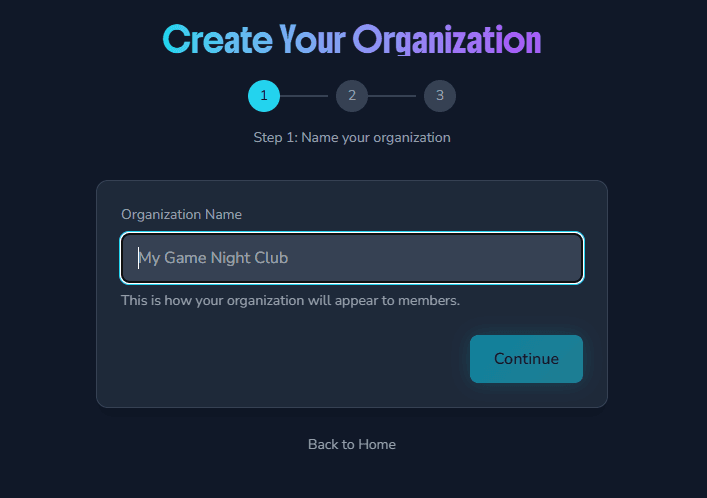
Create your group in seconds - just pick a name like "Friday Night Family"
Example: "Friday Night Family" or "Board Game Squad."
Step 2: Add your players
Keep it simple. You can always add more later.
Step 3: Add your games (game definitions)
This is the part that makes the rest easier. A "game definition" is basically how the game should be scored in your app.
Once your game is set up once, you are not reinventing scoring every time you play.
Step 4: Record a session
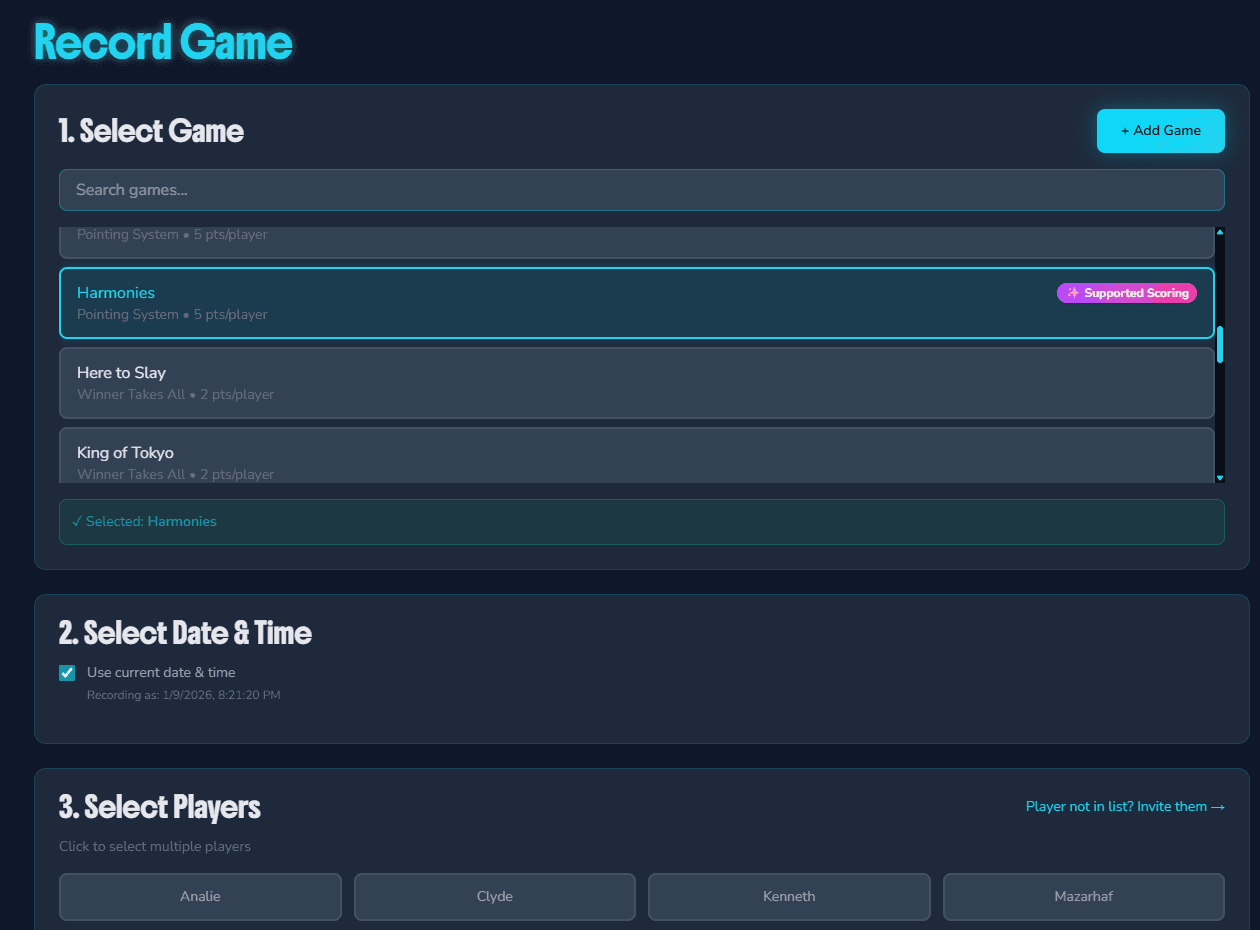
Recording a session is quick - select game, date, and players
Log scores as you play or enter them at the end. Either way, your session gets saved automatically in your history.
Step 5: Check leaderboards and stats
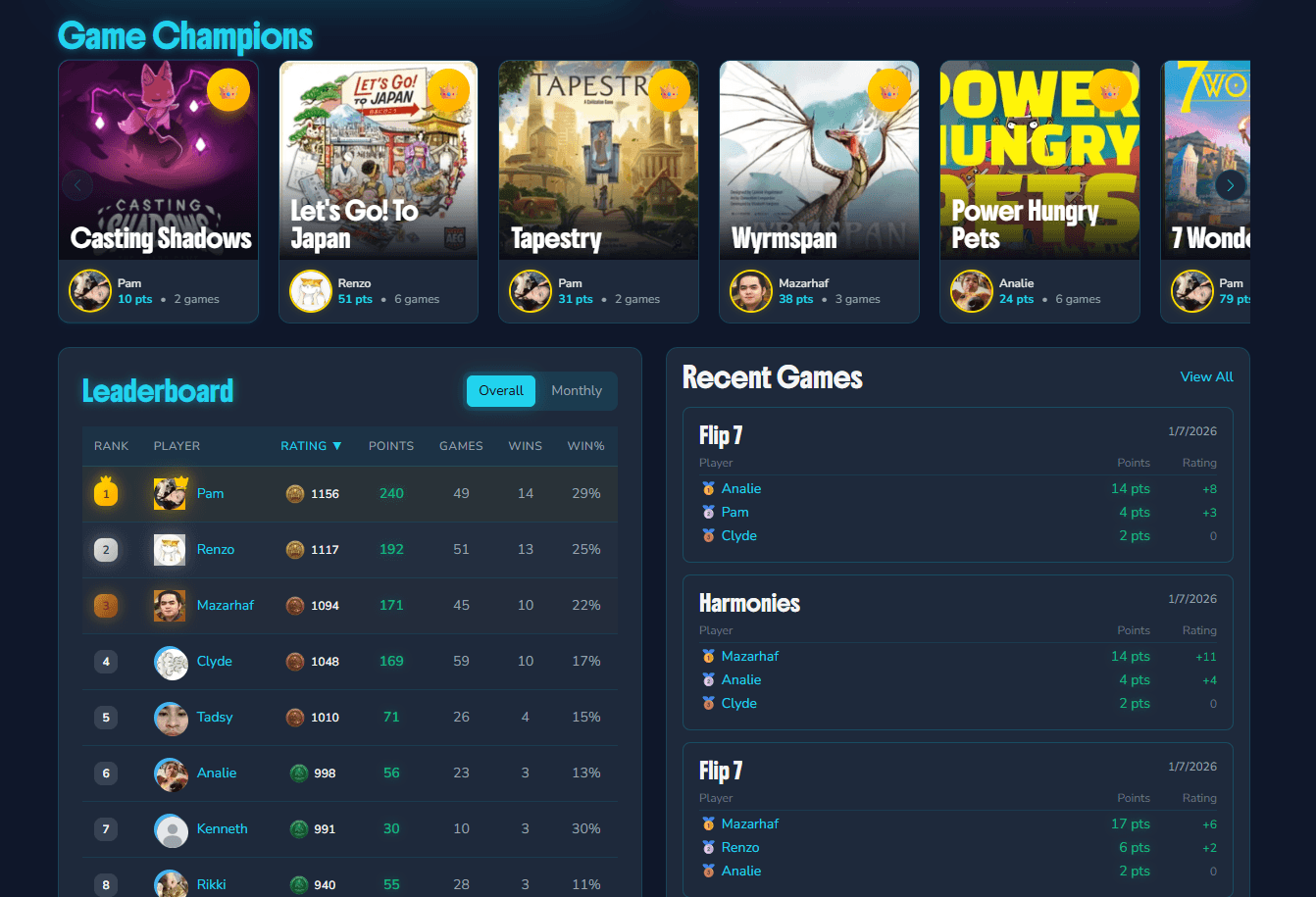
See who is winning over time with leaderboards and game history
This is where it gets fun:
- •Who is actually winning over time
- •Which games you play most
- •How close your matches are
- •Weekly or monthly top players
A practical example: what this looks like in real life
For families
Families often want speed, clarity, and fewer disputes.
A dedicated score tracker helps because:
- •Scoring stays fair and consistent
- •You can keep a simple family game history
- •You can make "weekly winner" a fun tradition
- •You do not have to keep paper sheets
For friend groups
Friend groups tend to care about stats, rivalry, and remembering who "always wins."
This is where features like:
- •Group based tracking
- •Session history
- •Stats over time
- •Weekly and monthly leaderboards
really shine.
It turns "who won last time?" into "let's check."
Questions we hear all the time
What is the easiest way to keep score for board games?
The easiest way is whatever your group will actually use consistently. Paper is fast, but a dedicated board game scoring app is best if you want history and stats over time.
How do you track board game stats over time?
You need a system that saves sessions, not just totals. Look for a board game stats tracker that logs games played, winners, and scores automatically, then visualises trends over time.
What is better than a spreadsheet for board game scores?
If spreadsheets feel like work, use a dedicated board game score tracker that supports groups, session history, and features like round based scoring and built in calculators.
Do I need to track every game to get value?
No. Even logging your main 5 to 10 games can give you a useful history and fun group stats.
Want to try the "no spreadsheet" workflow?
If you want, you can try the same setup we use in BoardGameTally. It is built for:
- •Groups and recurring game nights
- •Round based scoring
- •Automatic score calculators for math heavy games
- •Session history
- •Weekly and monthly leaderboards and stats
If you do try it, the most helpful thing you can share is: what felt confusing, what you expected to happen, and what feature you wish existed.